
Environment
Circular Economy (CE)
Basic Approach
Roadmap
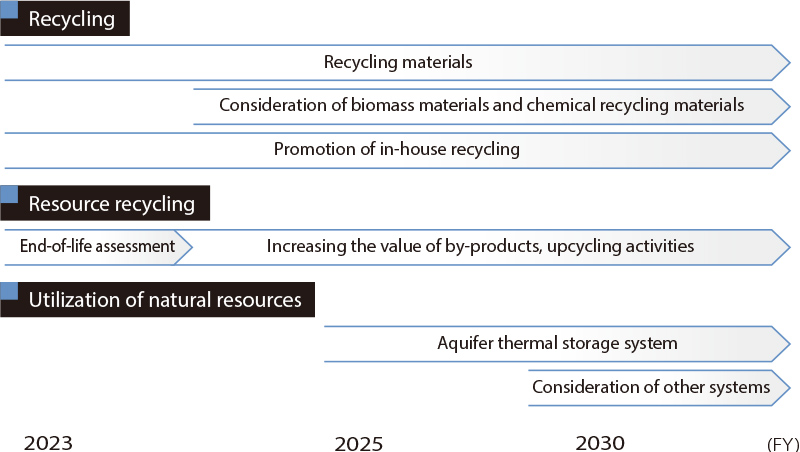
To enable the sustainable use of finite resources, we consider everything—not only materials, products, and waste, but also nature itself—as a resource.
We promote the effective use of resources throughout the entire product lifecycle by taking a multifaceted approach encompassing a wide range of initiatives. These include promoting reuse and recycling, introducing bio-based materials, utilizing byproducts, and implementing upcycling.
We also actively utilize natural resources, aiming to realize a sustainable circular society.
Waste emissions
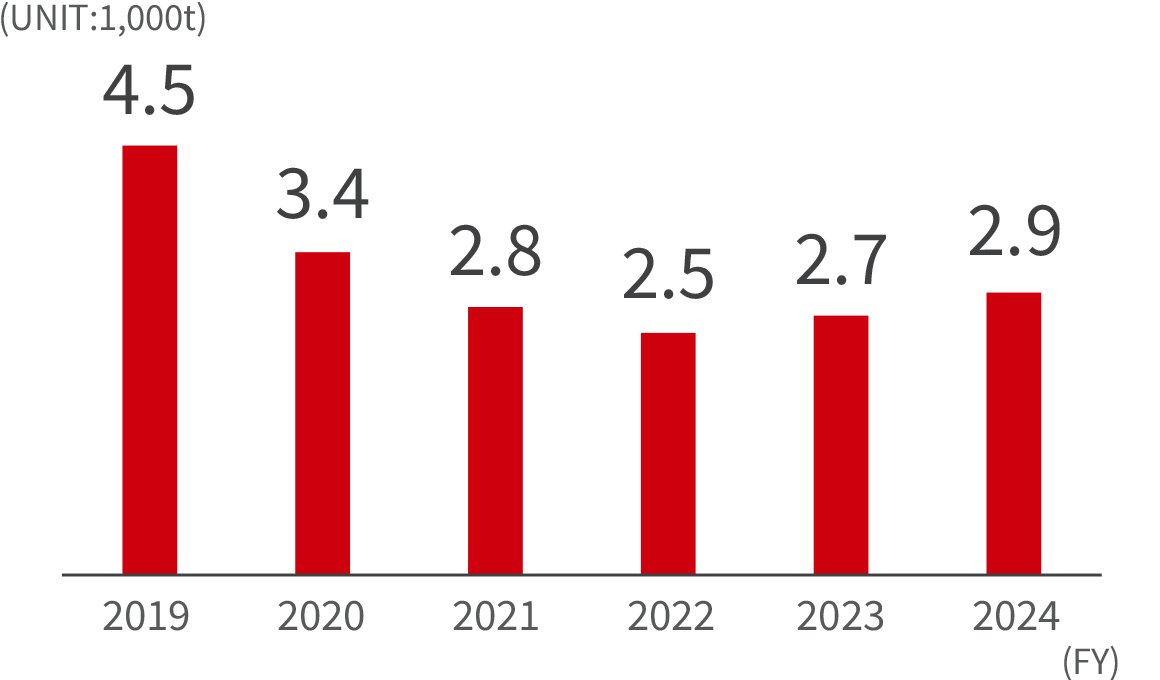
Waste emissions intensity (per product)
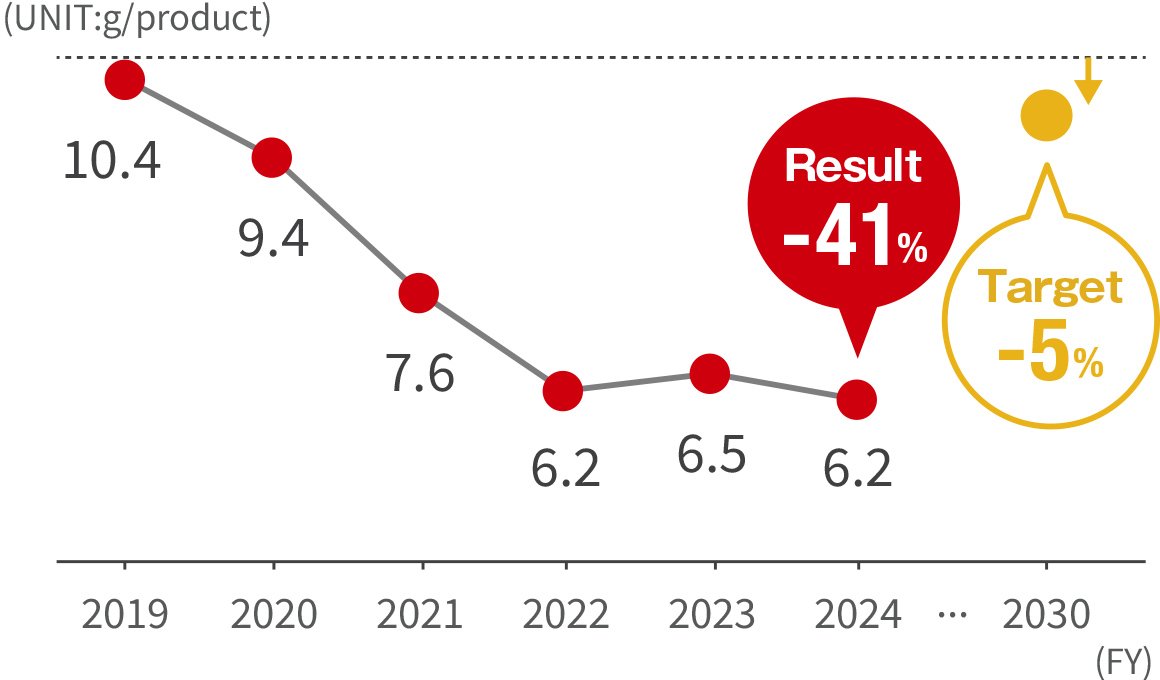
Environmental data
We also publish details of other environmental data.
Main initiatives
Improving in-house recycling
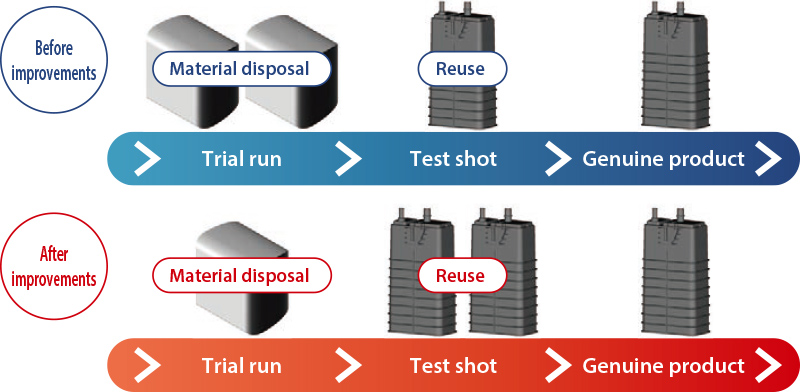
In the mold-making process for product forming, lump-shaped waste material was generated daily during equipment startup. By revising the number of test shots and discharging the material in a form closer to the final product, we enabled material crushing and reuse, achieving effective resource utilization.
Reusing resin molding process runners
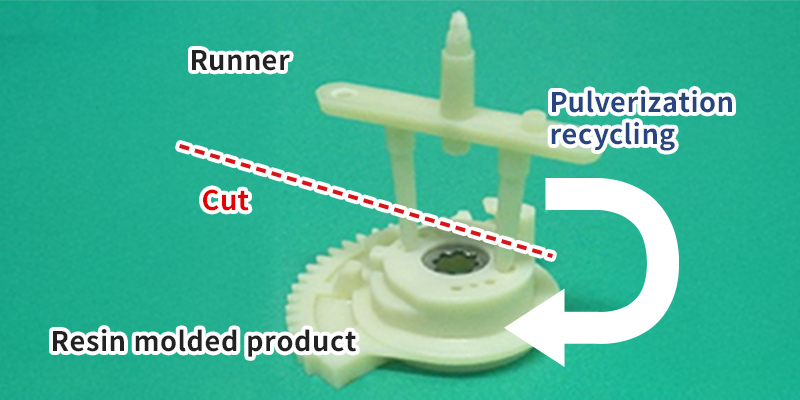
With a view to reducing both CO2 emissions and new material procurement volume, we reuse runners formed during the resin molding process for electronic throttle gear sub-assemblies.
We pulverize the runners for reuse as a recycled material in resin molded products.
Energy circulation utilizing natural resources
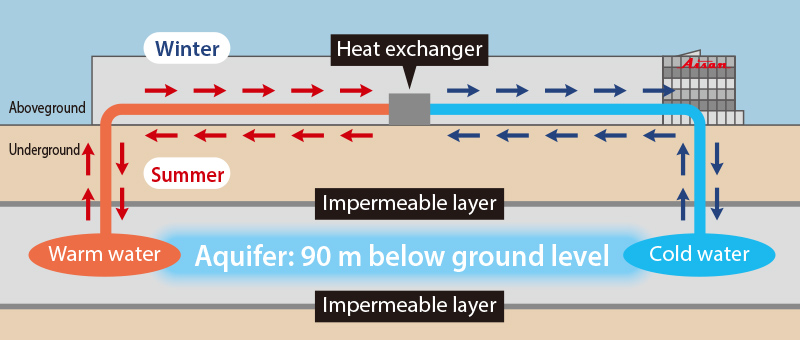
At the Aisan Future Factory, we have established an energy circulation system* that utilizes an aquifer 90 meters underground as a thermal storage tank. By storing the cold and heat discharged from air conditioning systems in underground aquifers and utilizing this stored thermal energy seasonally, it is possible to reduce air conditioning energy consumption by approximately 50%.
- Aquifer thermal storage system
Sustainable and Recyclable Packaging
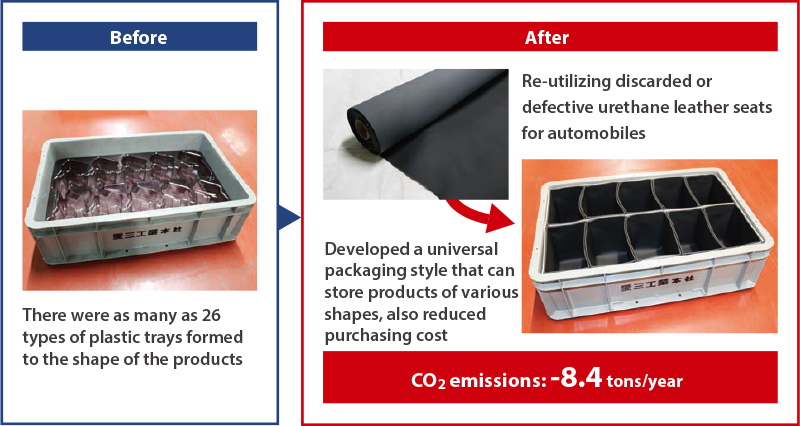
Conventionally, we used plastic trays for the packing of EGR valves. These trays had to be discarded when damaged or when there was a model change, as there were a total of 26 different types for each product. The processing was labor intensive and involved sorting, searching and confusion.
Therefore, we worked with Kyowa Leather Cloth Co., Ltd. to develop packaging materials by reusing defective urethane leather seats. By standardizing the packaging with one universal style, we have developed sustainable packaging that is easy to work with.